3 September 2026 · Ideal Ferizi
Breathable Paint for Old Houses, Explained
What breathable paint means for a Victorian or Georgian home, why modern masonry paint traps damp in solid walls, and how to pick the right finish.
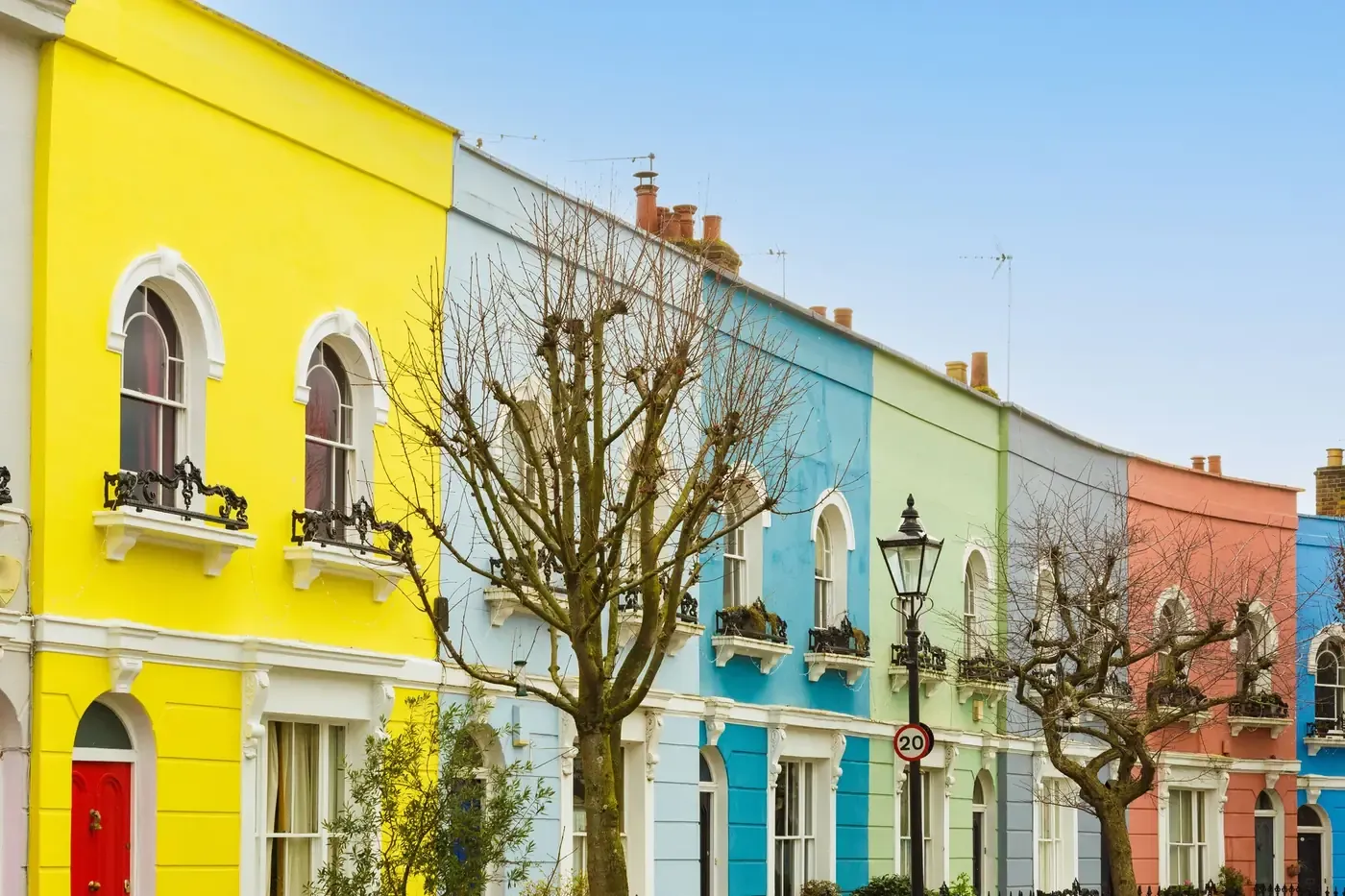
Breathable paint lets water vapour pass through the paint film instead of sealing it inside the wall. Old houses need it because solid walls take up moisture and release it again, and a modern impermeable coating blocks that second half. Trap the moisture and it goes somewhere worse: into plaster, skirtings, joists and the masonry itself.
If you own a period property in Camden, this is the single most consequential paint decision you will make on the outside of the building, and it matters inside too.
Why old walls work differently
Most buildings put up before 1919 have solid walls with no cavity, and they were built to get wet and dry out again. According to Historic England, older buildings were constructed so that moisture can enter the fabric and then evaporate away. Lime mortar, lime render and lime plaster are all absorbent and porous, and they let that happen.
This is not a small niche of the housing stock. According to the English Housing Survey 2024 to 2025, 20 per cent of owner occupied homes in England were built before 1919. In Camden the local share is far higher, which is why the problem turns up on so many of the terraces we work on.
A modern cavity wall handles water completely differently. It keeps the outside wet and the inside dry, with a gap between them. Paint that suits that system does not suit a solid wall, and this is where most damp problems in period homes begin.
What “breathable” means in numbers
Breathability is measured as vapour resistance, and lower is better. According to the SPAB, a material suitable for use on older buildings should have a vapour resistance of up to about 2.5 MNs/g, and 19mm of non-hydraulic lime render comes in at roughly 1.0 MNs/g.
Standard modern paint systems sit well above that range. That is the whole problem in one number. The wall can still absorb moisture from driving rain and from the ground, but the coating slows its release to a crawl, so the moisture accumulates instead of cycling.
What that looks like on a real house
The damage shows up in an order you can almost predict. Paint blisters and flakes off in sheets, because moisture pushing outward has nowhere to go and lifts the film. Render cracks and hollows out behind. Internal plaster blows, salts appear on the wall, and skirtings and joist ends near the damp start to rot.
The frustrating part is that the paint usually gets blamed for failing when it was doing exactly what an impermeable film does.
Choosing the right paint outside
For solid masonry and lime render, the workable options are mineral paints and traditional limewash.
Mineral paints bond chemically into the surface rather than sitting on top as a film, and they stay highly permeable. They hold colour well and last considerably longer than limewash between repaints, which is why they are our usual recommendation on a Camden frontage.
Limewash is the traditional finish and the most permeable of all. It suits lime render and soft brick, gives a depth of surface no modern paint reproduces, and needs refreshing more often.
Standard acrylic masonry paint is the one to avoid on a solid wall, however good the coverage and however long the warranty. It is designed for a different kind of building.
There is a separate question of whether you should be painting the brickwork at all. In Camden, often you should not, and there are planning rules that govern it. Our exterior painting surveys cover both the material choice and the consent position before any work is priced.
Breathability inside the house
The same logic applies indoors on solid external walls, though the pressure is lower. If a wall is drying inward, a sealed vinyl emulsion on the inside face keeps that moisture in the plaster.
Traditional heritage emulsions are formulated for this. Farrow & Ball’s Estate Emulsion, for example, carries a Class 1 breathability rating in its product data, alongside a very flat 2 per cent sheen. Clay and mineral-based interior paints do the same job.
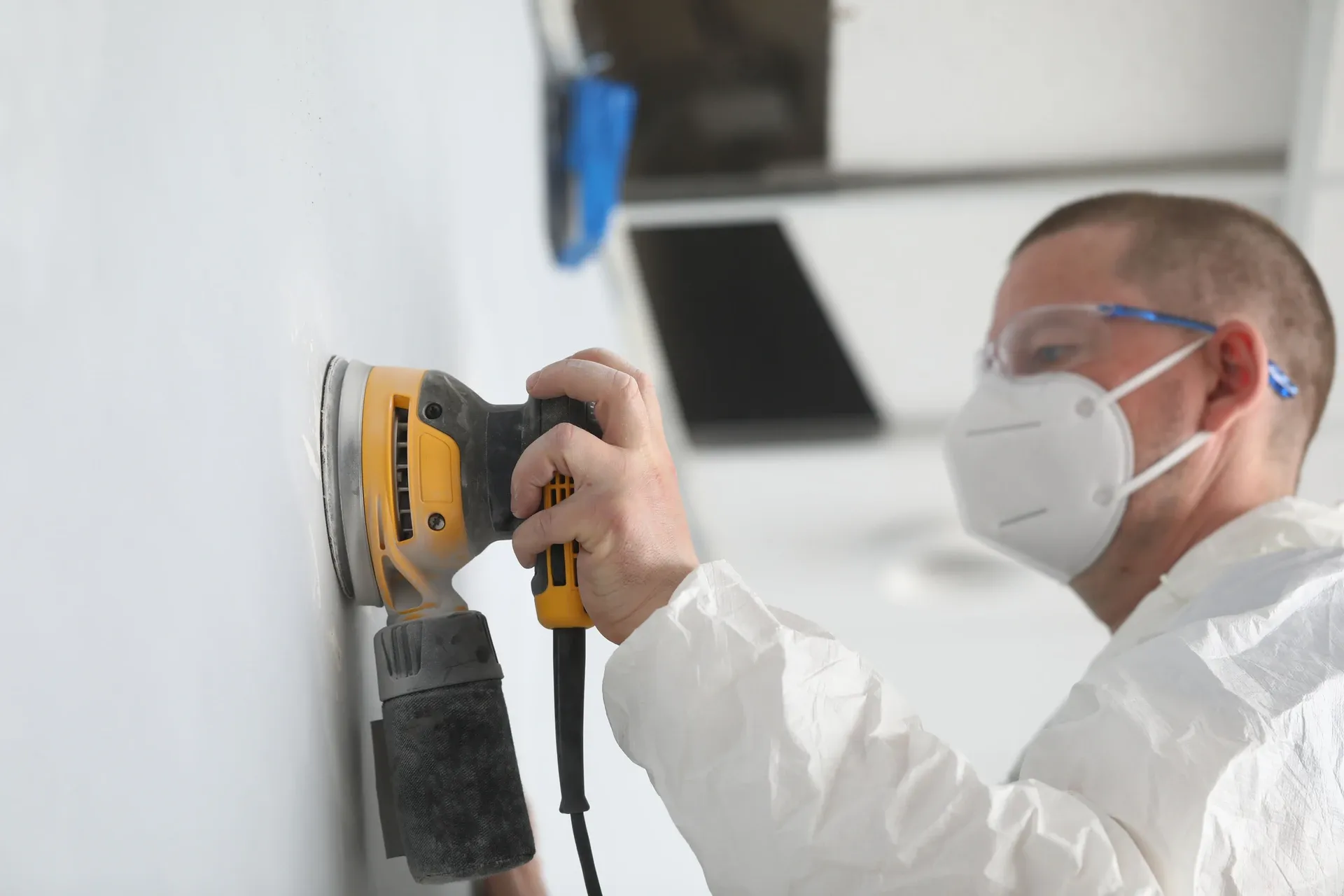
On a wall that has already suffered, paint alone will not fix it. If the plaster has blown, it needs taking back and replacing with a lime-based system before decorating, which is plastering work rather than a painting job. Painting over blown plaster buys a few months at most.
Why you cannot just paint breathable over sealed
This catches people out. Applying a breathable finish on top of an existing impermeable coating achieves nothing, because the sealed layer underneath still controls what the wall can do. The vapour has to get through every layer, and it will only move as fast as the tightest one lets it.
So the honest sequence on a wall that has been sealed is: remove the old coating, let the wall dry out, repair the render or plaster with compatible lime-based materials, then apply a permeable finish. The stripping is the slow part and it is where most of the cost sits. Any quote that skips it is quoting a different, shorter job that will not last.
Getting it right on a Camden period property
Most of the terraces, conversions and mansion blocks across Camden, Highgate and Hampstead are solid-walled and were built to breathe. We work on them every week, and we survey the existing coatings and the state of the render before recommending a system rather than after.
Our heritage painting work covers period exteriors and interiors across North London, using permeable systems on solid walls and conventional systems where the building is actually suited to them.
For a free, no-obligation quote, call us on 07455 705074. We will look at the walls, work out what is already on them, and tell you honestly whether you need a full strip or just a repaint.
Written by

Ideal Ferizi
Co-Owner & Operations Manager, FERIZI LTD (Ferizi Property Services)
15 years in the trade. The company carries £4 million of public liability cover.
Common questions about breathable paint for old houses
What does breathable paint actually mean?
It means the paint film lets water vapour pass through it rather than sealing it in. Older solid walls take up moisture and release it again, so the finish on them has to allow that movement. A paint that blocks it traps moisture in the wall, where it damages plaster, timber and the masonry itself.
Does my Victorian house need breathable paint?
If it has solid walls rather than a cavity, almost certainly yes, and that covers most housing built before about 1919. Solid walls were designed to let moisture evaporate back out. Sealing them with a standard modern masonry paint removes the escape route and usually shows up as damp patches and blown plaster.
Can I put breathable paint over existing masonry paint?
Not usefully. A breathable coat over a sealed one is still sealed, because the impermeable layer underneath governs what the wall can do. The old coating has to come off first, which is the slow and expensive part of the job and the main reason we survey before quoting this work.
Is breathable paint more expensive?
The paint costs more per tin, and where an impermeable coating has to be stripped first the labour adds more than the paint does. Set against replastering a wall that has been sealed for years, it is the cheaper path. We price the stripping and the finish separately so you can see which part is which.
Get a free painting quote in Camden
We visit, give you a fixed price and get started. No obligation.
Get a free quote