3 September 2026 · Ideal Ferizi
Spray Painting vs Brush and Roller: Which Finish Is Right for Your Camden Home?
Spray painting vs brush and roller compared: finish quality, speed, masking, dust and cost, and when each method is the right call for a Camden property.
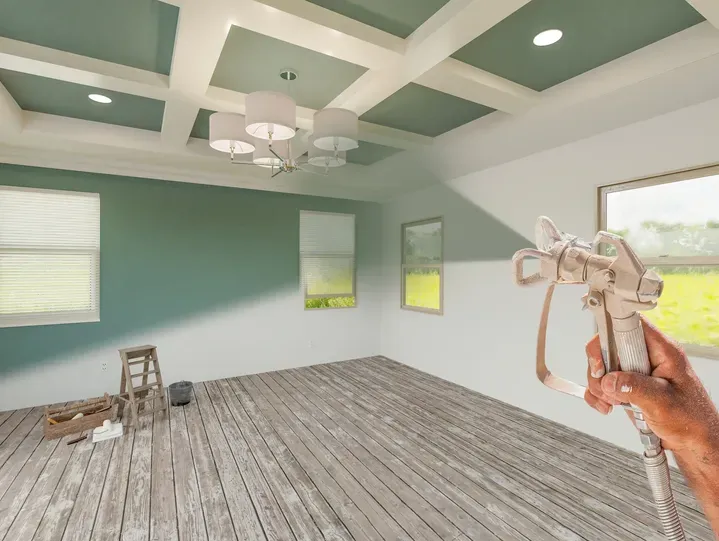
Spray painting gives a flatter, more uniform finish and covers ground far faster, while brush and roller gives you more control in occupied rooms and on textured surfaces. The right choice comes down to what you are painting, whether the room can be cleared, and how much masking the job needs. For most Camden homes, the honest answer is that a good decorator uses both.
Here is how the two methods actually compare on a real job, and how we decide which to use.
The short comparison
| Spray | Brush and roller | |
|---|---|---|
| Finish | Flat and uniform, no brush marks or roller stipple | Slight texture, visible on gloss and dark colours |
| Speed on large areas | Much faster | Slower |
| Masking and setup | Heavy, often the longest part of the day | Light |
| Paint used | More, because of overspray | Less |
| Works in an occupied room | Poorly | Well |
| Detailed joinery, spindles, radiators | Excellent | Slow and awkward |
| Textured surfaces such as pebbledash | Patchy, needs more coats | Better, works paint into the texture |
| Small patch repairs | Not worth the setup | Ideal |
Speed is the real argument for spraying
On open surfaces the difference is not marginal. According to Graco, airless spraying is up to ten times faster than using a brush and at least four times as fast as a roller.
That figure describes the painting itself, not the day. Masking claws a large part of it back. On a cleared three-bedroom flat in Kentish Town the speed advantage is real and shows up in the price. On one bedroom with furniture in it, the setup swallows the gain entirely.
So the useful way to read the speed claim is this: spraying wins when there is a lot of surface and little to protect. It loses when there is little surface and a lot to protect.
Where spraying clearly wins
Kitchen units and doors. Cabinet doors and drawer fronts have flat faces, profiled edges and rebates that a brush leaves marks in. Sprayed, they come back with a factory-like finish that wears better because the film is even. This is why we take doors off and spray them for kitchen cabinet painting rather than painting them in place.
Detailed joinery. Balustrades, spindles, panelled doors, radiators and cast metalwork are slow and awkward with a brush, and the brush leaves runs in the corners. Spraying covers the detail in a fraction of the time with a cleaner result.
Empty rooms and whole-property refurbishments. When a property is between tenants or before you move in, there is nothing to mask and nothing to work around. This is where spray painting is at its most efficient.
Ceilings across a large open space. A sprayed ceiling has no roller lap marks, which shows under downlights.
Where brush and roller wins
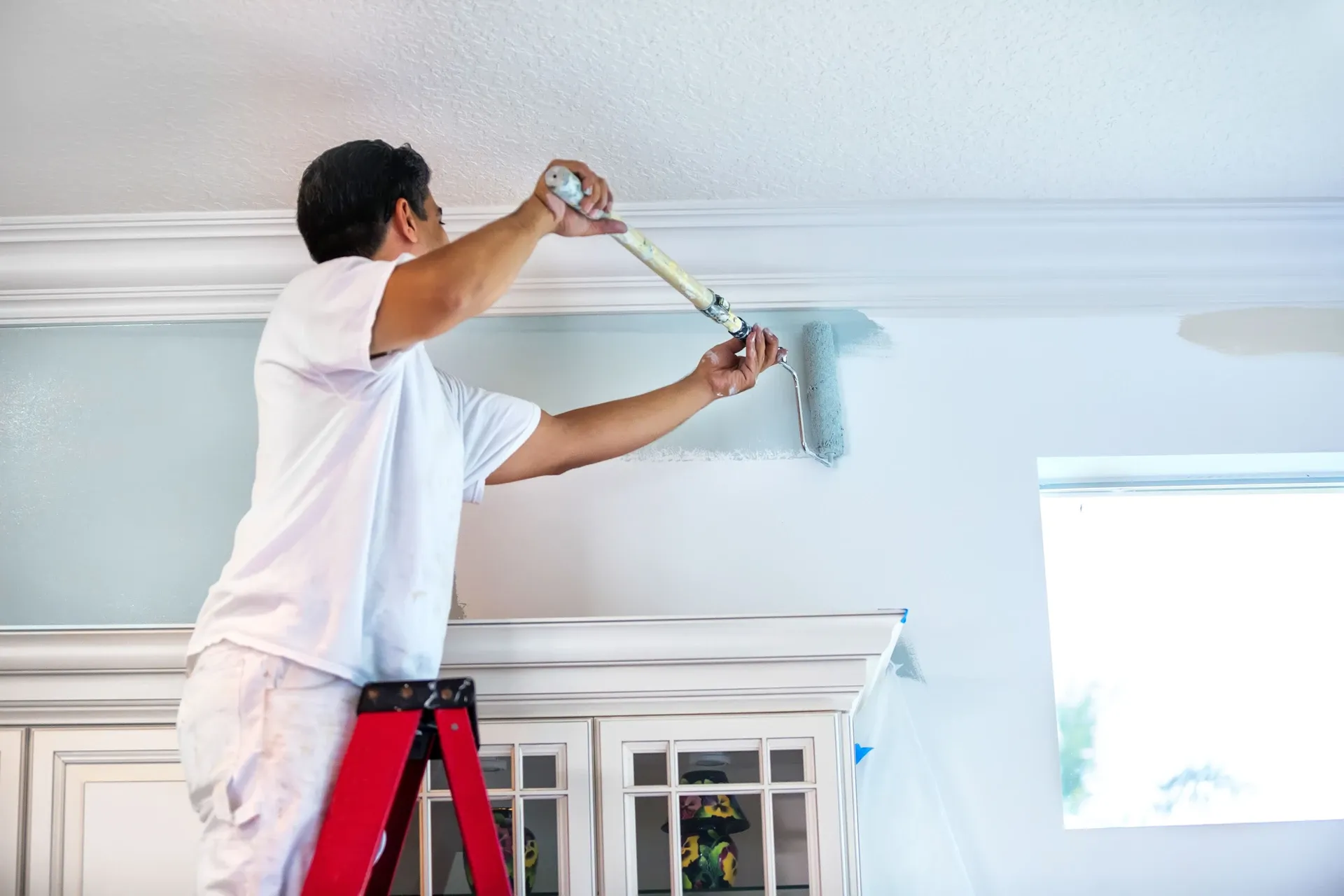
Occupied rooms. If you are living in the property and the room cannot be cleared and sealed, rolling is the sensible method. It is the honest answer even though it is the slower one.
Textured exterior surfaces. On pebbledash and heavy render, spray sits on the surface rather than working into it, which risks thin patches in the hollows and more coats to fix them. A masonry brush or a long-pile roller pushes paint into the texture and lasts better. Our exterior painting work on rendered North London frontages is mostly brush and roller for exactly this reason.
Patch repairs and single walls. Masking a room to spray one wall makes no sense. Rolling takes twenty minutes.
Cutting in against original features. On a period property with cornicing, picture rails and timber sash windows, careful brushwork against an existing line is often cleaner than masking every edge.
The dust question people forget to ask
Spraying does not create dust, but the preparation before it does. Sanding filler and old paintwork is the dusty part, and that happens whichever method follows. What spraying adds is airborne paint mist, which is why the room has to be sealed and why we do not spray around people, pets or open food.
What it means for the price
Spraying is not automatically cheaper. It trades labour for materials and setup. On a large or empty job the labour saving is bigger than the extra paint and masking, so the price comes down. On a small or furnished job it does not, so it goes up.
We quote the method that produces the right result for the property rather than defaulting to one. If both would work, we say so and price both, and you choose. Every quote is fixed and written before we start, so the method is settled before anyone opens a tin.
Which one for your property?
For a period conversion in Hampstead or Highgate with original joinery and people living in it, expect mostly brush and roller, with doors taken away and sprayed. For an empty flat being turned around between tenancies, expect spraying to do most of the work. For a kitchen respray, spraying every time.
If you are not sure which your job needs, we will tell you on the visit. Call us on 07455 705074 for a free, no-obligation quote and we will look at the rooms, the access and what you want the finish to look like before recommending a method.
Written by

Ideal Ferizi
Co-Owner & Operations Manager, FERIZI LTD (Ferizi Property Services)
15 years in the trade. The company carries £4 million of public liability cover.
Common questions about spray painting versus brush and roller
Is spray painting better than a brush and roller?
Neither is better across the board. Spraying gives a flatter, more uniform finish and covers large or detailed surfaces far faster, which is why it suits kitchen units, doors and whole empty rooms. Brush and roller wins on occupied rooms, small patch work and heavily textured surfaces where masking would cost more than it saves.
Does spray painting use more paint than rolling?
Usually yes, because some material is lost as atomised overspray and because sprayed coats are laid on evenly rather than worked into the surface. The extra paint is normally offset by the labour saved on a large job. On one small room it rarely is, which is part of why we do not spray everything.
How much masking does spray painting need?
A lot, and it is the part people underestimate. Everything not being sprayed has to be covered, including floors, glass, sockets, radiators, and any room the overspray could drift into. On a furnished flat that preparation can take longer than the painting, which is why spraying pays off best in empty or cleared rooms.
Can you spray a room while we are living in the property?
We can, but we usually advise against it for whole rooms. Spraying needs the space cleared and sealed, and the room stays out of use while it dries. In an occupied Camden flat we normally brush and roller the walls and take doors or cabinet fronts away to spray them properly elsewhere.
Get a free painting quote in Camden
We visit, give you a fixed price and get started. No obligation.
Get a free quote