15 September 2026 · Ideal Ferizi
Hanging Wallpaper on Old Walls: Rolls, Pattern Repeats, Lining Paper and Paste
How to keep wallpaper flat on older walls: lining paper, paste-the-wall or paste-the-paper, how pattern repeats change the roll count, and batch numbers.
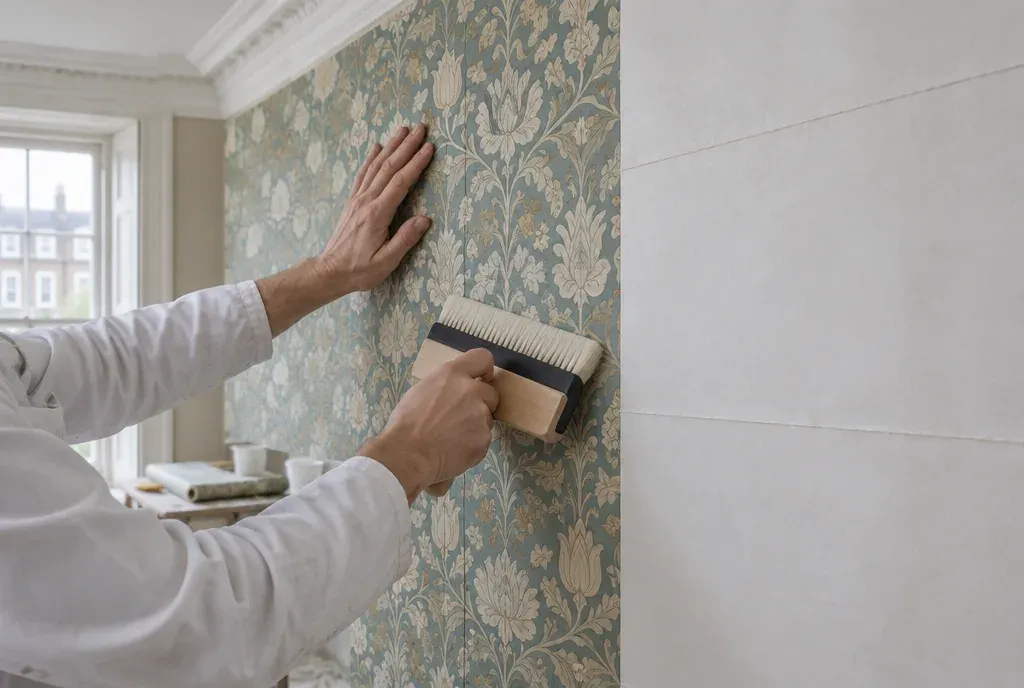
Wallpaper stays flat on an old wall when three things are right before the first drop goes up: the wall is sound, primed and cross-lined where it needs it, there are enough rolls from one batch to cover the pattern repeat, and the paper is hung with the paste method it was made for. When paper bubbles, lifts or shows a colour change halfway along a wall, the cause is almost always one of those three.
Older Camden houses make the first one harder than it looks. Plaster bows, patches sound hollow where lath sits behind it, and walls have often been papered and painted more than once.
Why wallpaper lifts on old walls
Most failures start under the paper.
Bare or patched plaster absorbs paste unevenly, so some areas grip and others dry out before the paper has bonded. Old paint or soft distemper underneath can let go and take the new paper with it. Our guide to what period property painting involves explains why distemper catches so many people out. Cracked or bowed plaster keeps moving, and paper stretched across a moving crack eventually opens along it.
That is why a good paper hanger strips old coverings back to a sound surface first, rather than papering over what is already there.
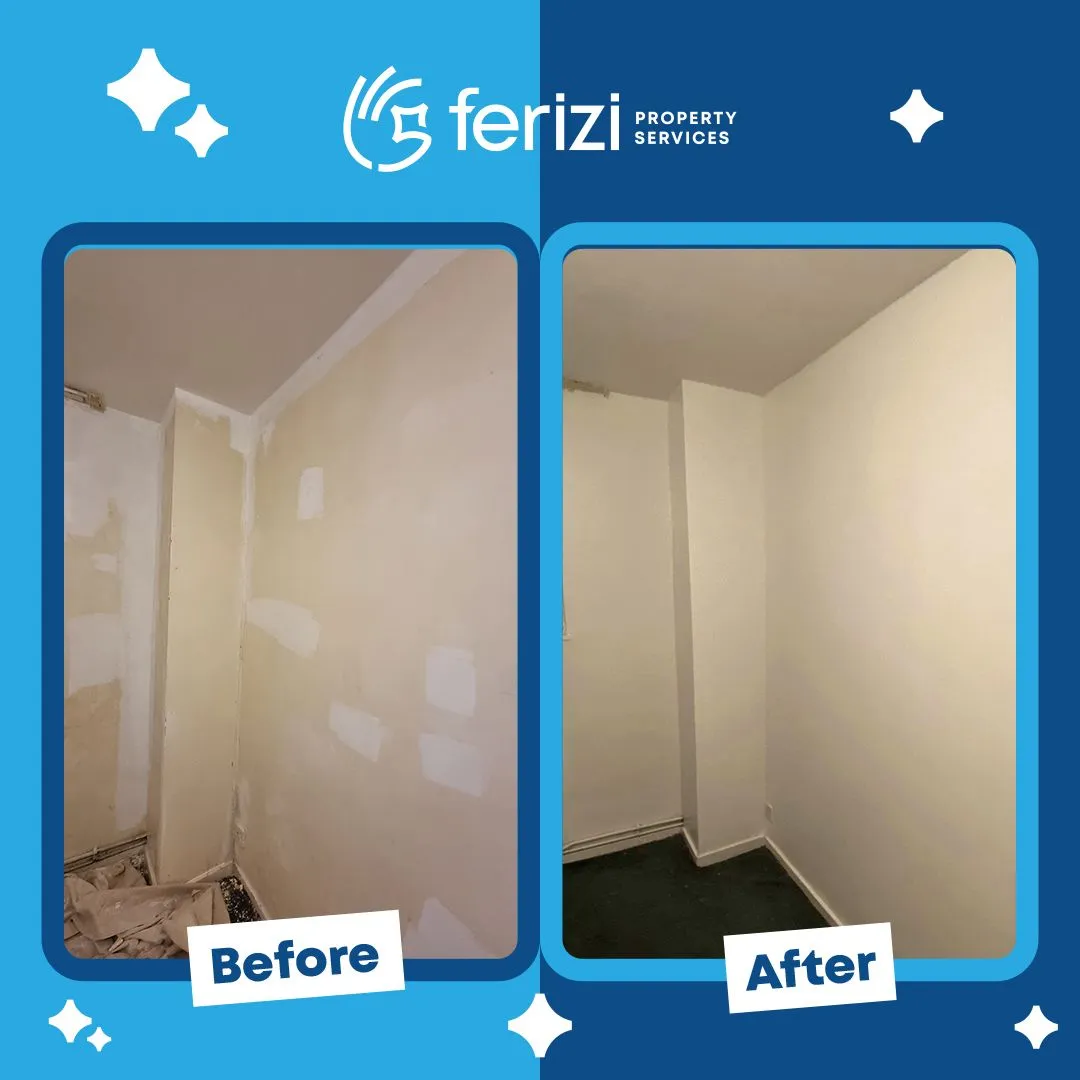
Where the plaster is loose or badly cracked, filling is not enough. It needs proper plastering before any paper goes on, and a re-skimmed wall will take paper better than a patched one.
Lining paper and cross-lining
Lining paper is a plain paper hung underneath the finish paper to give it an even base. On older walls it does most of the work.
Cole & Son’s hanging instructions say walls must be primed and, if necessary, cross-lined with lining paper, and that lining paper should always be hung horizontally and allowed to dry completely before the finish paper goes on.
The reason for hanging it horizontally is practical. Little Greene explains that cross-hanging stops the paste on the top paper lifting the joints of the lining paper underneath. The joints of the two layers never line up, so neither one pulls the other open. If lining paper is going to be painted rather than papered, Little Greene says to hang it vertically with flush joints.
Lining paper comes in grades. Erfurt MAV makes it in grades from 800 to 2500, and Cole & Son recommends a good quality 800 or 1000 grade under its own papers. The paper maker’s instructions are the thing to follow.
Paste-the-wall or paste-the-paper
The paste method is set by the paper, not by preference.
Paste-the-wall papers are usually non-woven. Little Greene describes a non-woven base as one that does not expand when wet, so the paste goes onto the wall and the dry paper is hung straight onto it. Little Greene notes this makes them easier to hang for someone with less experience.
Traditional papers are pasted on the back and left to soak before they go up, because the paper expands as it takes up the paste. Hang one too early and it keeps expanding on the wall, then shrinks back as it dries, which is where bubbles and open seams come from. Hand-printed and specialist papers often carry their own instructions, including a specific paste, and those override any general rule.
Using the wrong paste is one of the easiest ways to spoil an expensive paper, so check the label and the maker’s hanging sheet before anything is mixed.
Pattern repeats and how many rolls to buy
The pattern repeat changes the roll count more than people expect.
Cole & Son defines the four common matches. A random match has no pattern to line up at the edges, such as a vertical stripe. A straight match repeats across the roll, so the pattern joins at the same height on the next drop. A half drop repeats diagonally, so each drop sits half a repeat lower than the last, and a third drop steps down by a third. According to Cole & Son, a large repeat or a half or third drop can mean you need more rolls, and it recommends adding the size of the repeat to the height of the wall when working out how much paper you need.
A worked example shows why. Take a wall 2.8m high and 4m wide, and a standard roll, which Little Greene gives as 52.5cm wide and 10m long.
- The wall needs 8 drops, because 4m divided by 52.5cm is just over 7.6.
- With no repeat to allow for, each drop is 2.8m, so a 10m roll gives 3 drops. That is 3 rolls.
- With a 64cm repeat added, each drop is 3.44m, so a roll gives only 2. That is 4 rolls.
That is a third more paper for the same wall, before any allowance for trimming. Little Greene recommends allowing an extra 10 per cent for trimming and pattern matching, and its product pages include a roll calculator.
Batch numbers matter as much as the count. Cole & Son explains that a batch number identifies rolls produced together, and that rolls from the same batch should be hung together to avoid colour differences from roll to roll. Check every roll carries the same product code and batch reference before the first one is opened, and buy enough in one go. A roll bought later to finish a wall can come from a different batch.
Feature wall or the whole room
A single papered wall and a fully papered room need the same preparation. What changes is how the rest of the room is finished.
On a feature wall, the other walls are usually painted, and the paint colour is best pulled from the paper itself. Our guide to matching period paint colours covers undertones, and a colour consultation settles the scheme against the actual paper in your own light. We often hang paper as part of a wider interior painting job so the paper and paintwork are planned together.
For landlords, a papered feature wall can lift a letting between tenants without a full redecoration. Our end-of-tenancy decorating checklist covers what else to do in the same window.
What to ask before booking a paper hanger
- Will you check the plaster first? Listen for a plan to strip back and deal with loose or cracked areas before hanging.
- Does the wall need cross-lining? On most older walls the honest answer is yes.
- How many rolls do I need for this repeat? A good hanger measures the wall against the repeat rather than guessing.
- Are all the rolls from one batch? They should be checked before any are opened.
- Which paste method does this paper need? The answer should come from the manufacturer’s instructions.
- Is stripping the old paper included? Get the whole job in one fixed price.
Paper hanging across Camden
We hang wallpaper across Camden and North London, including Kentish Town, Primrose Hill, West Hampstead, Belsize Park and Maida Vale, in period houses and flats where lining and preparation decide the result.
Our paper hanging in Camden service covers everything above: stripping and making good, cross-lining uneven walls, measuring rolls against the repeat and hanging traditional or paste-the-wall papers. Most clients choose and buy their own paper, and we will tell you how many rolls to order before you buy.
Written by

Ideal Ferizi
Co-Owner & Operations Manager, FERIZI LTD (Ferizi Property Services)
15 years in the trade. The company carries £4 million of public liability cover.
Common questions about hanging wallpaper on older walls
How many rolls of wallpaper do I need?
Measure the width of the wall and divide by the roll width to get the number of drops. For each drop, take the wall height and, if the paper has a large repeat or a half drop, add the length of the repeat. Then work out how many of those drops a roll gives you. Cole & Son recommends adding the repeat to the height, and Little Greene suggests allowing an extra 10 per cent for trimming and pattern matching.
Should lining paper go on horizontally or vertically?
Horizontally if wallpaper is going over it. Little Greene says cross-hanging stops the paste on the top paper lifting the joints of the lining paper underneath. If the lining paper is going to be painted instead, it is hung vertically with flush joints.
What is the difference between paste-the-wall and paste-the-paper wallpaper?
Paste-the-wall papers are usually non-woven. Little Greene describes non-woven as a base that does not expand when wet, so the paste goes on the wall and the dry paper is hung straight onto it. Traditional papers are pasted on the back and left to soak before hanging, because they expand as they take up the paste. Always follow the method the manufacturer gives for that paper.
Why does wallpaper bubble or lift on old walls?
Usually because of what is underneath. Bare plaster soaks the paste up unevenly, old paint or distemper can let go, and bowed or cracked plaster moves. Priming the wall, cross-lining where the surface is uneven and using the right paste for the paper solves most of it. A wall that is badly cracked may need re-skimming first.
Get a free painting quote in Camden
We visit, give you a fixed price and get started. No obligation.
Get a free quote